Political Campaigns, from Washington to Trump — In Southampton
By Linda Lee —
This is a big year for American history, our Semiquincentennial year. (Who even knew that was a word? It means half of five hundred.) It’s the anniversary of when a bunch of discontented subjects, mostly in New England, declared they wanted to separate from a far-away king. Does American history seem boring? Not through the eyes of the people who bring you the ads.
Take a look at “The Story of America: 1776-2026,” which is at the Southampton Arts Center from May 23 through July 18, 2026. A cocktail reception for the exhibit will take place from 5 to 7 pm on Saturday, May 23 at the museum; all are invited.
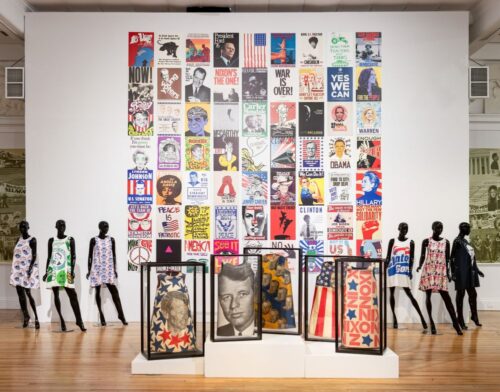
A display at the Southampton Arts Center; paper “miniskirt” dresses were shipped to campaign stops. (Photo credit: Gary Mamay)
Christina Mossaides Strassfield, executive director of the Southampton Arts Center, said. “This is a unique opportunity to showcase rare objects of American History … and to bring history to life.”
In cooperation with the Museum of Democracy’s Wright Family Collection and the Robert D.L. Gardiner Foundation, the Arts Center is showcasing how politicians from Washington to Trump have tried to win your attention. Their efforts involve red hats with a campaign slogan borrowed from Ronald Reagan, and buttons, so many buttons, cereal cartons, popcorn boxes, minidresses, posters and signs, songs, bedroom slippers for a select few, dirty tricks, and much more, all to sway voters.
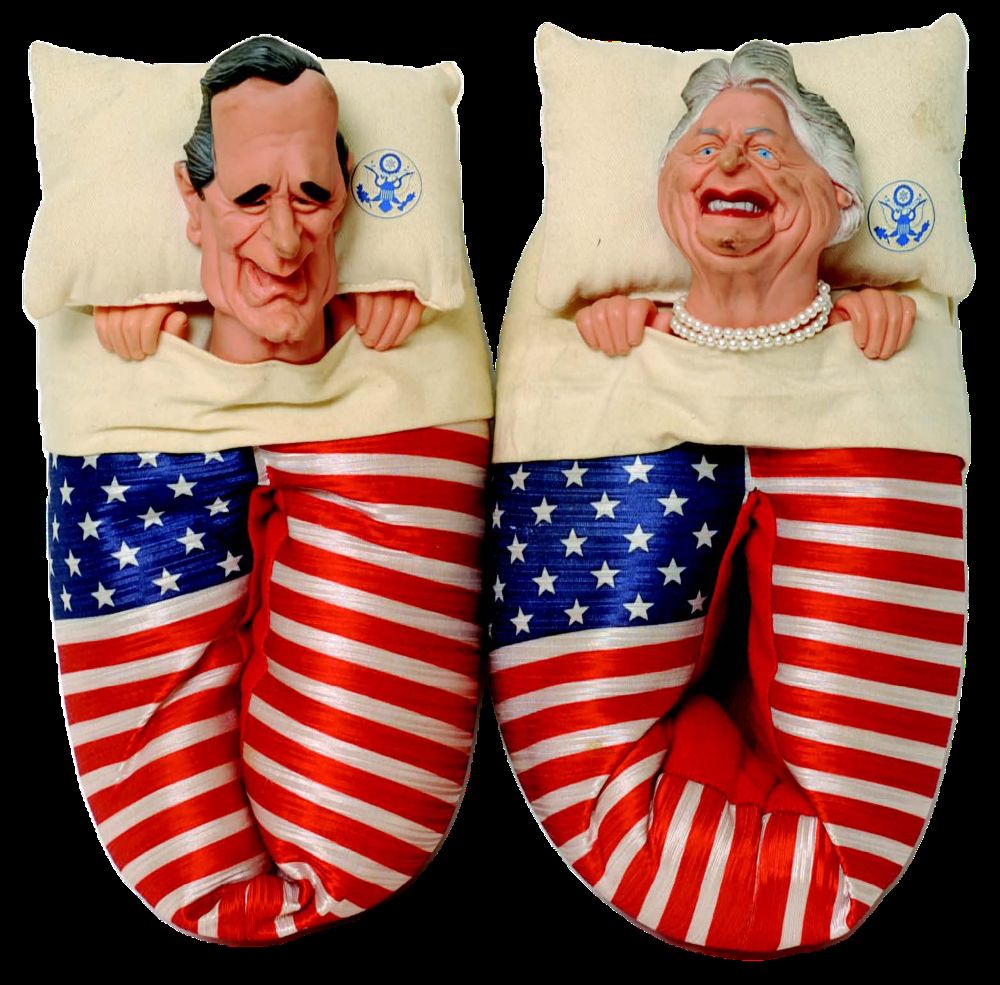
These George and Barbara Bush bedroom slippers must have been for family, donors or special White House guests.
The purpose is to cement their names in voters’ heads, to make them think the Other Guy is not as worthy, may even was a scoundrel, a drinker, a cheat, or perhaps have fathered a child out of wedlock. Sometimes (see Woodrow Wilson’s poster) they have even gone so far as to list their accomplishments.
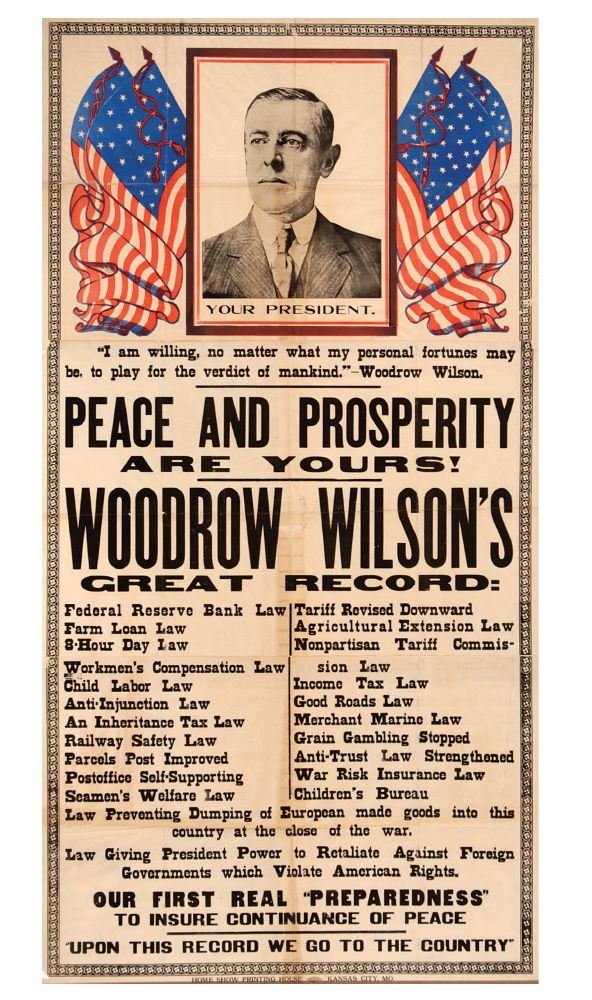
The Museum of Democracy has more than 1.3 million pieces of what would otherwise be considered ephemera, only a small portion of which is at the Art Center. Still, what is there will strike visitors as overwhelming and worth repeat visits, especially to someone interested in marketing. With its focus on presidents, its history does not begin until 1789, when George Washington was sworn in at Federal Hall in New York City. Celebrating the Semiquincentennial this year means cheering a political uprising few people thought would succeed, marked by an idealistic document called the Declaration of Independence.
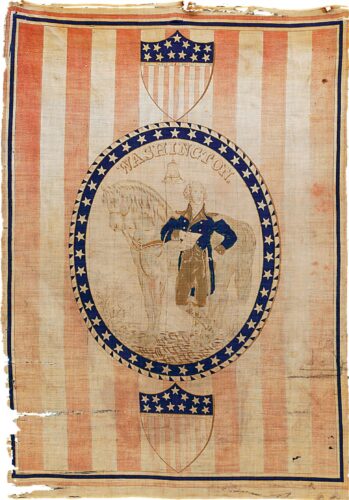
The flag for Federal Hall flew during Washington’s swearing in, which took place on a public balcony overlooking Wall and Broad Streets.
The flag that flew over Washington’s inauguration is in remarkable condition some 237 years later. Obviously, it has been treated reverentially and cared for by a series of people.
Washington was a figure of such prominence, despite a few tactical blunders during the war (there were no paparazzi back then), he was considered the hero. Talk about charisma. He was well-spoken gentleman farmer. He was tall, a dashing horseman. He was a surveyor, a talent as important as being a judge in those land-hungry times. He didn’t have any reprobate sons or a nagging wife. He was unanimously elected president. Who else?
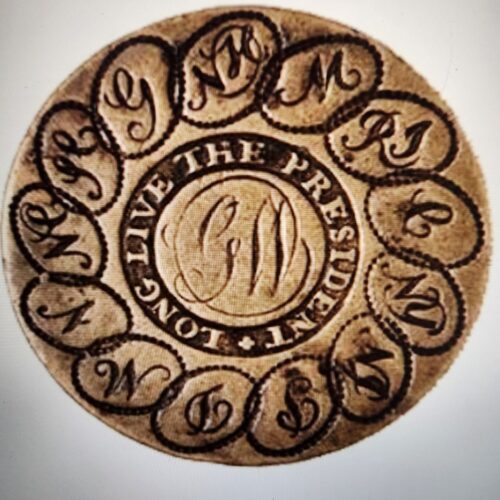
A button made before Washington’s inauguration.
Washington fever was so intense leading up to his swearing in that metal buttons, about an inch in diameter, were made in his honor. These weren’t “campaign” buttons. Madison S. Wright, the director of the nonprofit Museum of Democracy, has a favorite, with the initials of the 13 states around a calliagraphed “GW” and the words “LONG LIVE THE PRESIDENT.”
“Washington liked them so much that he purchased a set for himself and had the buttons sewn onto the jacket he wore during the ceremony, as they were meant to be worn on clothing,” she wrote in an email.
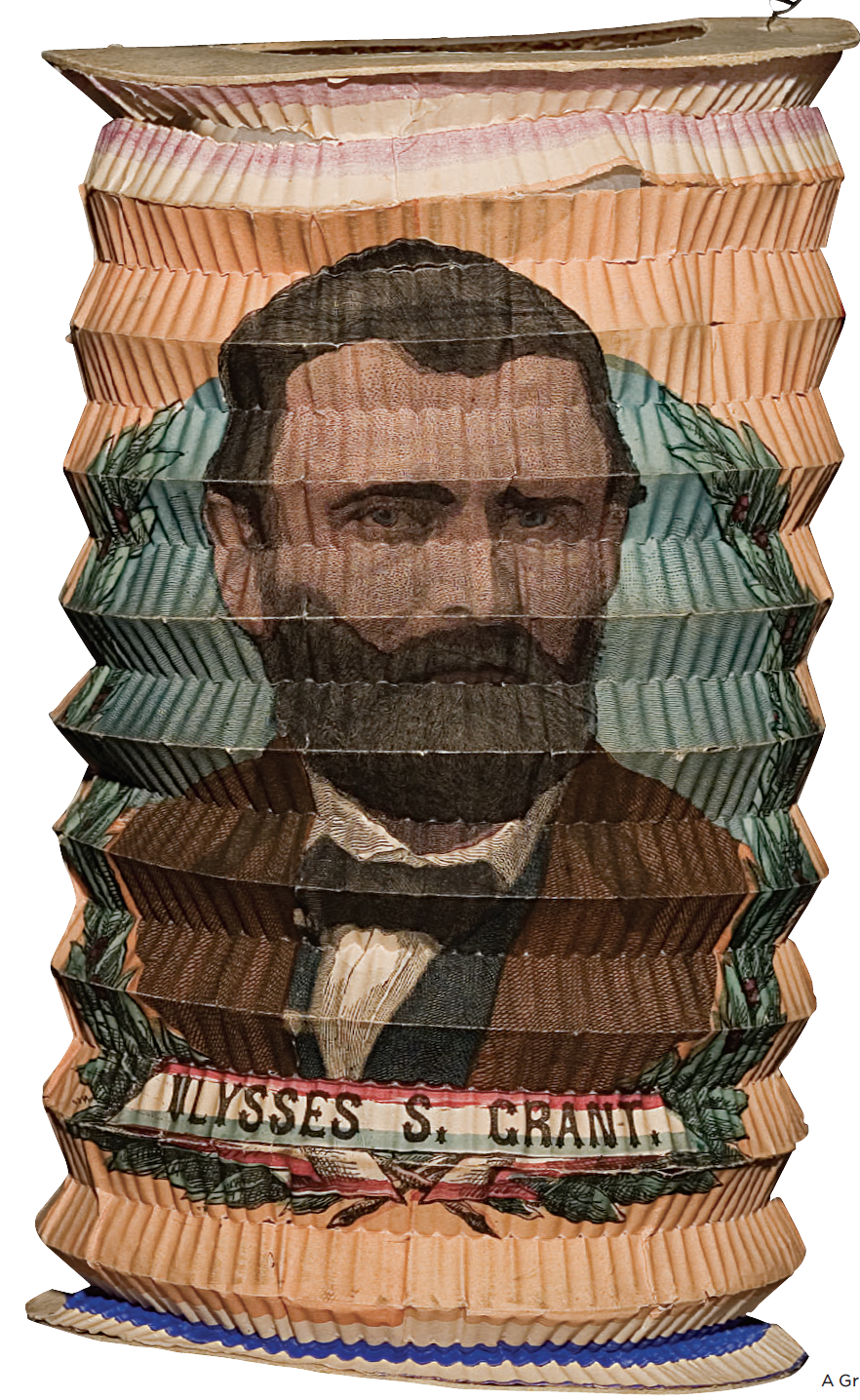
Grant ranks as No 18 among presidents, a fall from grace for the general who won the Civil War. The lanterns were nice, but they burned up.
Between the founding fathers and the 20th century, there were plenty of scandals and ways of wooing the public, from paper lanterns, walking sticks, banners and parades and many kinds promotional items. But not everything was part of a political campaign. Some of the collection could be considered fan worship, like the buttons. It should be no surprise that the collection includes this interesting portait of a young Abraham Lincoln, framed in an ornate setting made up of seeds and strips of saplings.
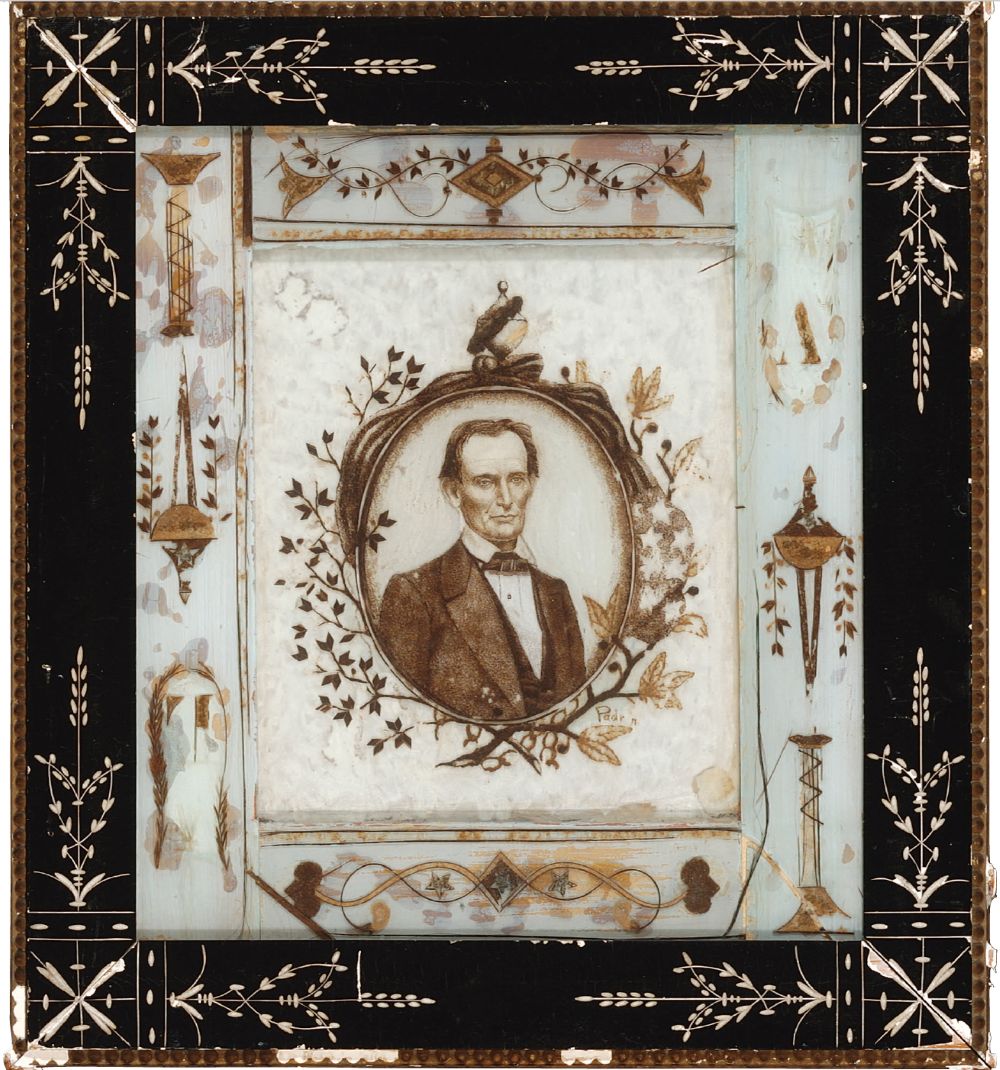
A delicate renderiing of a young Abraham Lincoln.
As with so many things from the Museum of Democracy, one item can answer a question, or lead to a new one, usually starting with “why?” That became patently evident in the battle over Prohibition. No one was for it. Then everyone was for it. Then everyone realized it bred crime and was a huge mistake. The Arts Center has a section on Prohibition. Again, the exhibit would reward several visits.
Interwoven with all of this was, of course, politics, and politicking.
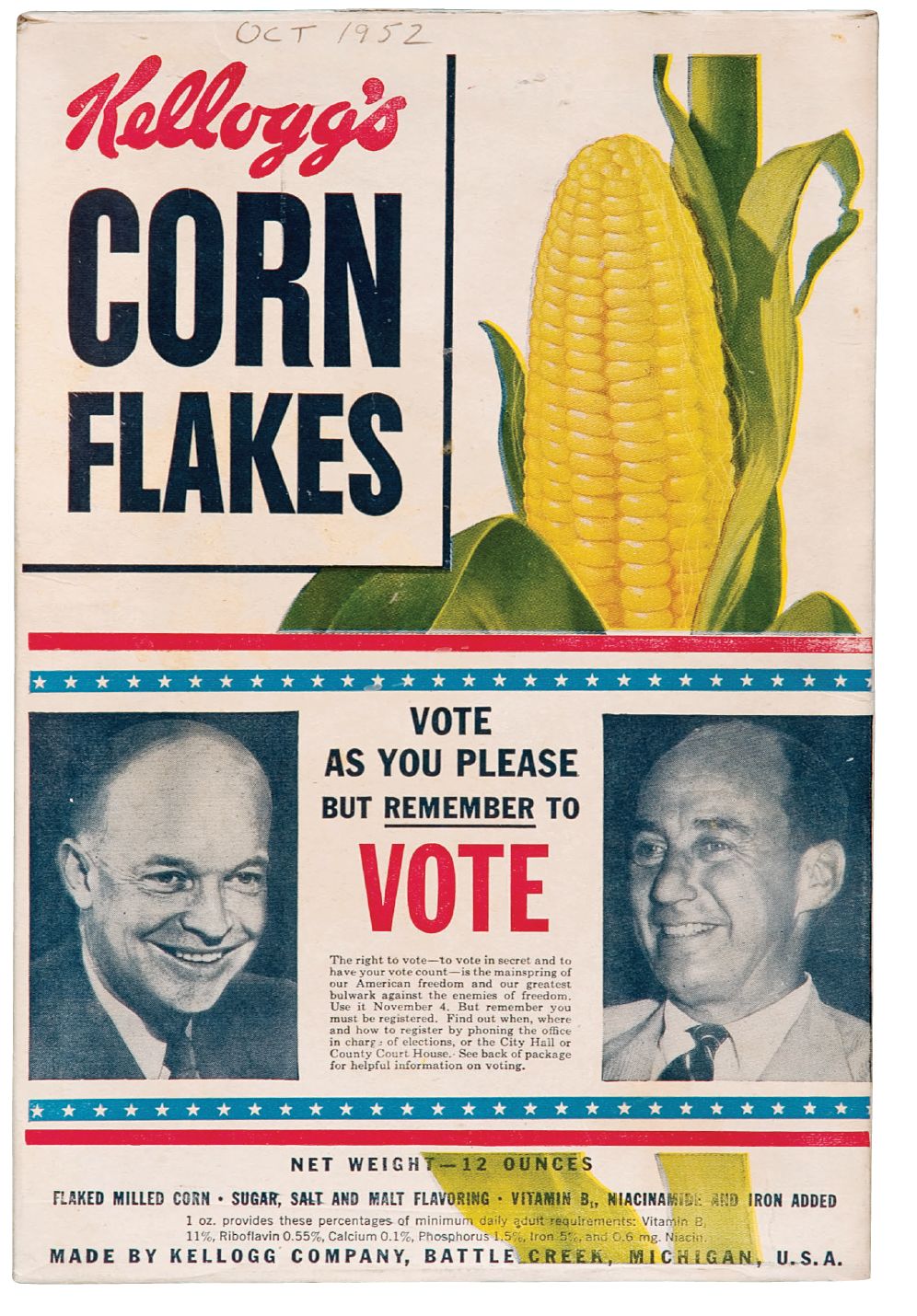
Campaigns were extended to corn flakes, popcorn, even ice cream and soft drinks. Sometimes these were used to survey preferences.
Some campaigns were fractious. Pay attention to the secret hinted at in a novelty doll in the 1896 campaign against the Republican William McKinley: McKinley on one side, flipped over, an African-American girl on the other. Things mellowed out for a while after World War II with a consensus that politicians should behave rationally, and be given equal time, as long as everyone went out to vote.
Madison Wright is the widow of Austin Wright, the former chairman of the Museum, who died of a brain aneurism in January. Rather than being put off by the Wright family passion for collection she was an enthusiast. She said in a phone conversation: “I have degrees in art history and always wanted to work in a museum.” She immediately picked up the reins to make the exhibit happen.
The fact that the Wrights have long had a house in Southampton — Austin Wright’s mother, Pamala Wright, is a familiar figure in town — made the work easier, she said. “We’ve all been staying together at the house, getting the exhibition ready. It’s been so much fun!” Madison Wright says.
The museum began as a hobby of Austin Wright’s father, Jordan M. Wright, who died in 2008. He caught the bug at the age of 10 after being handed a campaign button in 1968 at the headquarters of a dashing guy with a great smile, a former Attorney General to boot, who had announced his bid for the presidency. Little Jordan thought he had to pay for the button. “Nah, keep it,” a busy staffer said. “We’ve got millions of them.”
One has to wonder. Is that 1968 Bobby Kennedy campaign button still part of the collection?