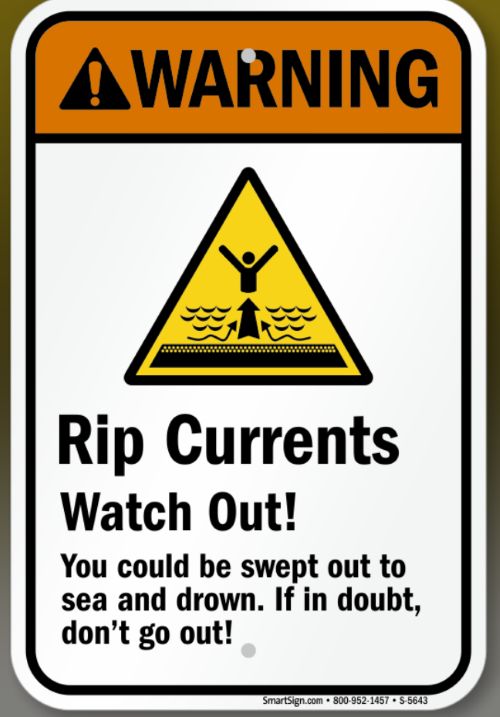
It’s a 5K Walk/Run for a Safe Swim
In 2023, in one week in early August, lifeguards rescued 16 swimmers on Main Beach in East Hampton, many of them caught rip currents. That same summer an experienced swimmer died in a rip current at Ditch Plains beach in Montauk.
No year since then has been quite that bad, but the threat of a rip current is always there. Regular waves carry water, sand, floaties and people toward the shore. A rip current is the opposite. It dunks you from below and pulls you out.
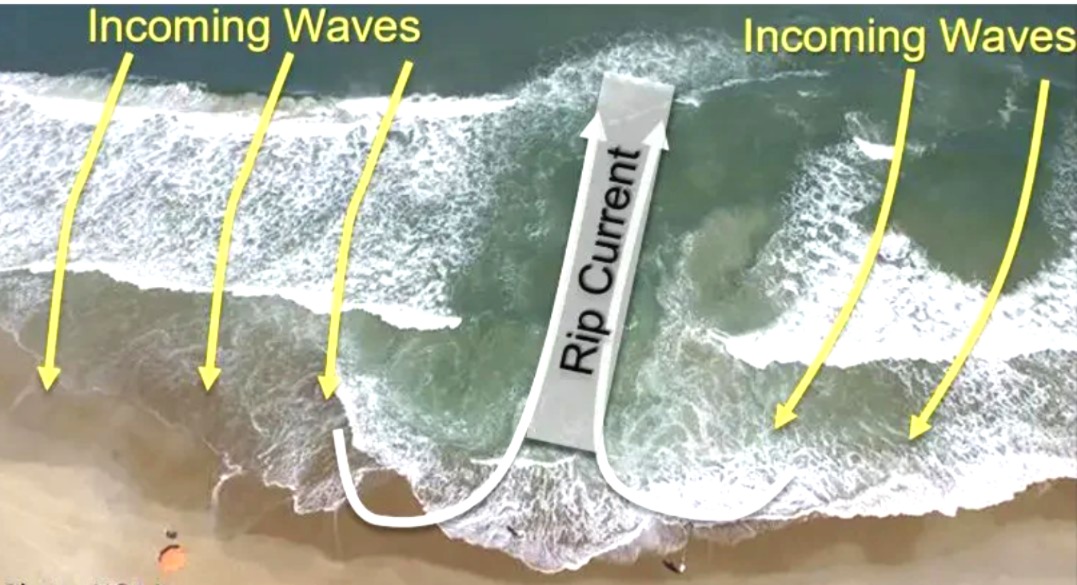
This graphic from NOAA shows the wave pattern that creates a rip current. Disturbances from distant storms may cause them.
If you are standing in the water, it can pull the sand out from under you and quickly take you away from shore. Because it is so strong, and so sudden, your immediate response is to panic. You fight the current, try to swim back to shore, put your feet on the bottom that is being swept away.
That is how people die.

Alexandra de Moura, showing her athletic prowess in gymnastics.
That is what happened to an accomplished gymnast, on vacation in the waters off Cabo San Lucas in 2019. She and two friends were caught by surprise while standing in three feet of water.

Her college teammates cheered after Alexandra de Moura executed a performance on the balance beam.
Her friends, two men, were able to escape. Her body was found two days later. Alexandra de Moura was 24. She was preparing for an advanced degree. She was unprepared for a rip current.

Alexanda de Moura with her mother, Jacqueline.
HOW TO REGISTER:
On Saturday, June 6, in Southampton, there will be a 5K walk/run in Alexandra’s honor, beginning at 25 Pond Lane, the Southampton Cultural Center. Her mother, Josephine de Moura, lives in Garden City and South Florida. But the de Mouras are well-known in the Hamptons. Her husband, Dr. Alexandre B. de Moura, is a prominent New York neurosurgeon and head of the New York Spine Institute. They are supporters of the Stony Brook Southampton Hospital Foundation.
You can register on Saturday morning, race day, for $49.33 as late as 7 am. The race begins at 8, rain or shine. Medals, photos, prizes. All proceeds, after race expenses, go to the Rip Current Awareness Foundation and the Alexandra de Moura Gymnastics Scholarship Fund.
If you can’t be there, here are the deets.
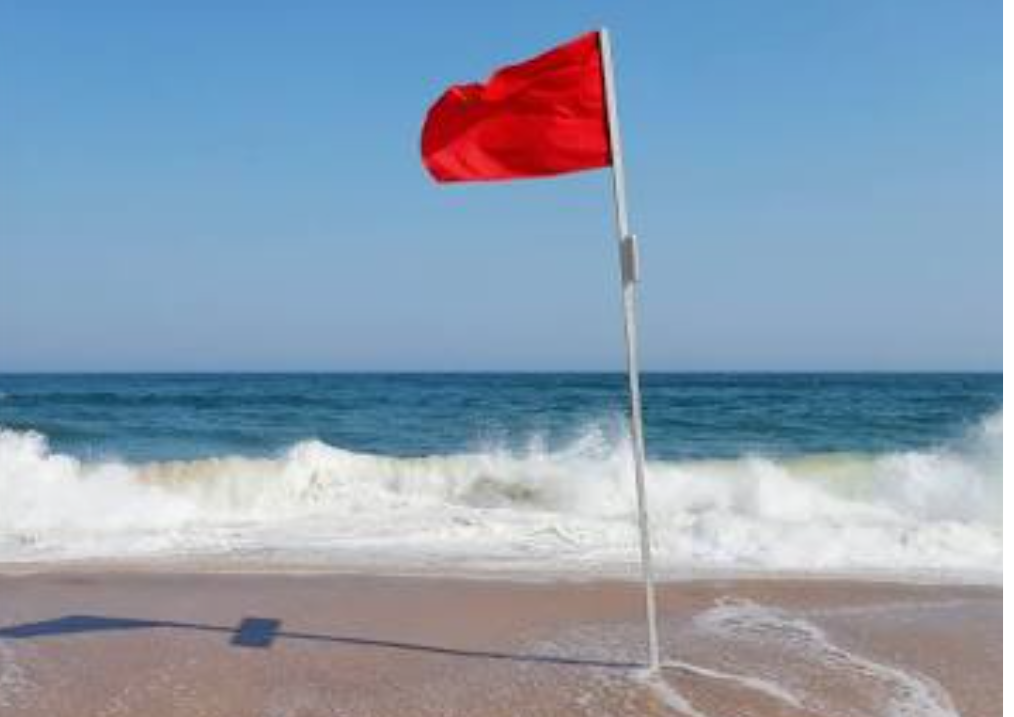
When lifeguards post a red flag warning they know something you may not know. If there is brown water, a flat surface on the water — those can indicate a rip current. These days they fly drones.
HOW TO AVOID A RIP CURRENT
Don’t panic. Alert anyone around you that you need help. Then float.
Now, begin swimming parallel to the shore, across the current.
It may carry you out, but not as far as if you had fought it and exhausted yourself.
Most rip currents are no more than 150 feet wide, so soon you will be out of its pull. Or a lifeguard will spot you and come to the rescue.
These days lifeguards often used drones, which make it easier to spot rip currents — a flat area in the surf — from above.
If someone does come to help you, don’t grab them, claw their arms or try to climb on top of them.
Panic is powerful. Just do what they tell you to do.
LINDA LEE